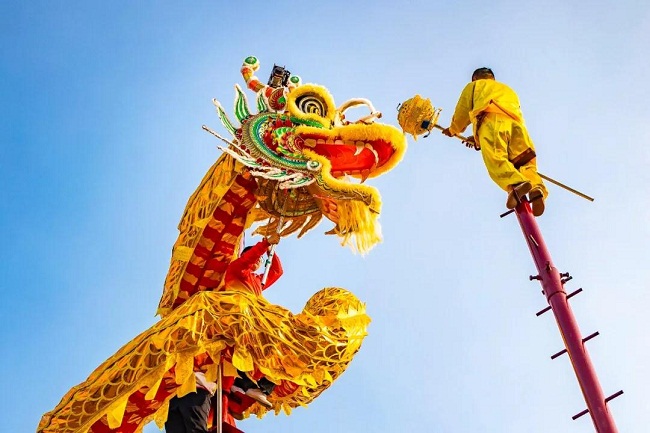
Lion and Dragon Dance
Introduction
The Lion and Dragon Dance is a traditional form of dance in Chinese culture, often performed during cultural celebrations and festivals. These dances are emblematic of prosperity, good fortune, and the dispelling of evil spirits. They are most prominently featured during the Chinese New Year and other auspicious occasions such as weddings, opening ceremonies, and major cultural events.
The Lion and Dragon Dance dates back several centuries and has deep roots in Chinese mythology and folklore. The lion is considered a symbol of power, wisdom and superiority, while the dragon represents strength and good luck. Historically, these dances were performed to honor gods and ancestors, requesting favorable outcomes and blessings for communities.
Lion and Dragon Dances have transcended cultural boundaries and are now a staple at Chinese cultural festivals worldwide. They are often performed in Chinatowns and during multicultural events in various countries.
Cultural Significance
In Chinese communities worldwide, the Lion and Dragon Dance is an expression of cultural pride and heritage. The dance usually involves acrobatic movements and is accompanied by traditional music played on instruments like drums, cymbals and gongs. The performance is believed to drive away evil spirits and bring good luck and happiness.
Lion Dance
The Lion Dance is typically performed by two dancers per lion — one for the head and one for the tail. The performers must be agile and well-coordinated, as the dance includes rhythmic movements and high jumps. The dancers often mimic the behavior of a lion, showcasing characteristics of playfulness and curiosity.
Dragon Dance
The Dragon Dance, on the other hand, involves a team of dancers who manipulate a long, flexible dragon figure made from materials like silk and wood. The dragon is held aloft on poles and moves in a sinuous, undulating manner to create the illusion of a serpent-like creature weaving through the air.
Modern Development
While traditional Lion and Dragon Dances maintain their historical essence, modern adaptations have emerged in response to changing cultural landscapes. Variations can include elements from different regions, such as the Hok San and Fut San styles of Lion Dance, which differ in their dance techniques, lion head designs, and drumming styles.
Performing the Lion and Dragon Dance requires rigorous training and discipline. Dancers must develop strength, agility, and coordination to execute the complex choreography effectively. Training often begins at a young age in Chinese dance schools or cultural centers, where students learn the traditional techniques and cultural significance of the dance.
Efforts to preserve this traditional art form include establishing cultural exchange programs, organizing competitions, and conducting workshops to educate younger generations about its historical and cultural importance.








